A payslip is not just a salary record. It is a statutory document that sits at the intersection of income tax compliance, PF and ESI obligations, and wage law. Most Indian employers issue them as a routine. Some do not issue them at all, or issue versions that are incomplete. Both create problems, and the problems tend to surface during audits or disputes rather than on the day the salary is paid.
Trusted by 4,000+ companies across India
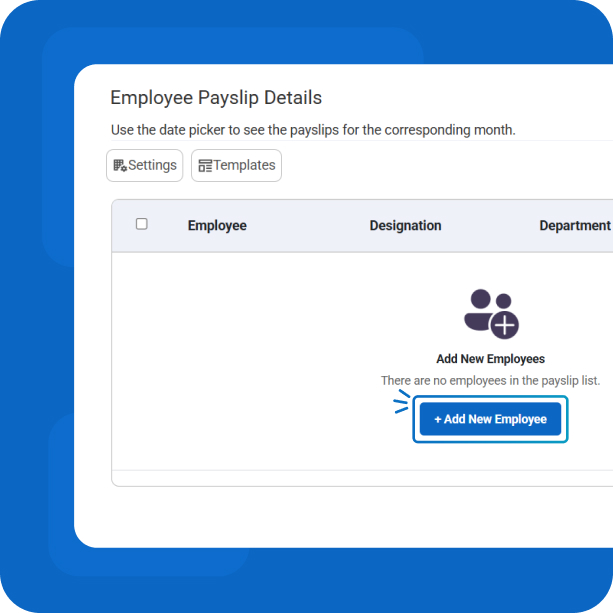
A payslip, sometimes called a salary slip, is an official document issued by an employer to an employee each pay period. It sets out the full breakdown of what the employee earned, what was deducted, and what was credited to their account. It covers gross emoluments, statutory deductions, and net pay.
In India, the pay period is almost always monthly. The payslip is issued alongside or shortly after the salary disbursement and typically covers basic salary, house rent allowance, other allowances, Provident Fund contribution, ESI contribution where applicable, TDS, and any other deductions specific to the employee or the company.
The document serves two distinct purposes at once. For the employee, it is a record of what they were paid and a proof of income for loan applications, visa processing, and tax filing. For the employer, it is part of the wage register and a record that statutory obligations were met for that pay period.
The reasons go beyond formality. Each one has a practical consequence if ignored.
Several central and state-level laws require employers to maintain wage records and provide employees with a statement of wages. The Payment of Wages Act, 1936 applies to employees earning below a notified threshold. State Shops and Establishments Acts cover a broader set of establishments. Not issuing payslips is not a grey area under these statutes.
TDS is deducted monthly based on the projected annual income and the employee's investment declarations under Form 12BB. The payslip records what was deducted each month. If payslips are absent or inaccurate, the reconciliation at year-end for Form 16 becomes unreliable, and errors flow into the employee's income tax return.
Each payslip should show the employee's PF deduction, the employer's matching contribution, and the UAN. Employees check their EPF passbook against these figures. Discrepancies between the payslip and the EPFO record indicate either a filing error or a contribution shortfall, both of which carry compliance consequences for the employer.
Payslips are required for home loan applications, rental agreements, visa applications, and credit assessments. An employee who cannot produce payslips because their employer did not issue them is disadvantaged in ordinary financial transactions. That is a practical harm that reflects poorly on the employer and, in some contexts, creates legal exposure.
There is no single mandated format, but the content required for a payslip to be complete and compliant is well established.
Include the company name, address, and registration details where applicable, alongside the employee's name, designation, department, employee ID, and PAN. If the employee is covered under ESI, the ESI IP number should also appear. These identifiers connect the payslip to the relevant statutory records.
State the month for which the salary is being paid and the date on which it was or will be credited. Where salary is paid on a different date from the last day of the month, this distinction matters for TDS calculation and for any arrears computation.
List each component of the employee's gross salary separately. At minimum this covers basic salary, house rent allowance, and any special or fixed allowances. Variable pay, performance incentives, overtime, and arrears should each appear as distinct line items. Combining them into a single figure is inadequate and can complicate TDS computation since different components attract different tax treatment.
Show the employee's PF contribution (12% of basic salary plus dearness allowance for eligible employees), ESI contribution (0.75% of gross wages for eligible employees), and TDS for the month. These figures must match what is actually remitted to the respective authorities. A payslip showing deductions that were never remitted is a compliance failure, not just a documentation one.
The employer's PF contribution is 12% of the employee's basic salary plus dearness allowance. The employer's ESI contribution is 3.25% of gross wages for eligible employees. Showing these on the payslip, even though they are not deducted from the employee's salary, gives the employee a complete picture of the total cost of employment and confirms that contributions are being made on their behalf.
Any deductions beyond statutory ones must be listed separately and with a clear description. This includes professional tax (which varies by state), loan recoveries, salary advances, and any other amount being recovered. The Payment of Wages Act places restrictions on what can be deducted from wages and requires that each deduction be authorised. Listing them explicitly demonstrates that authorisation.
State the net figure clearly: gross earnings minus total deductions equals net salary credited. This is the number the employee sees in their bank account. Any discrepancy between the net salary on the payslip and the amount actually credited should be explainable and documented.
The Universal Account Number links all PF accounts held by an employee across different employers. Including the UAN on the payslip allows the employee to verify their EPF passbook independently. This is germane to any query about missing or incorrect PF contributions.
The Payment of Wages Act, 1936 requires wages to be paid within specified timelines and wage slips to be provided to employees. State Shops and Establishments Acts extend similar requirements to most private sector establishments, varying by state. The Employees' Provident Funds and Miscellaneous Provisions Act, 1952 requires that employees be informed of their PF contributions, which the payslip fulfils.
The New Labour Codes 2025, which came into force in November 2025, consolidate several of these obligations. The Code on Wages requires employers to give employees a wage slip before each wage payment. This is not new in practice but is now a centralised statutory obligation rather than one scattered across separate acts.
Minimum wage compliance is also visible through the payslip. The basic salary and total emoluments must meet the minimum wage prescribed for the relevant category and state. A payslip showing a figure below the applicable minimum wage is evidence of non-compliance, which attracts penalties under the relevant statute.
These points come up frequently in practice and are worth addressing before they become problems.
When a salary increment is applied retrospectively, the arrears payment must appear as a distinct line item on the payslip for the month it is paid. The TDS calculation for that month changes accordingly. Combining arrears with regular salary without labelling them separately makes it difficult to reconstruct the correct tax treatment later.
If the company has extended a salary advance or loan to an employee, the monthly recovery must appear as a named deduction on the payslip. The Payment of Wages Act restricts deductions to categories that are either statutory or expressly authorised in writing by the employee. An undocumented recovery shown without description creates compliance risk.
The payslip for an employee's last month of service is often the most scrutinised. It must account for leave encashment, gratuity if applicable, any salary in lieu of notice, and the exact number of days worked. Errors here are the most common source of post-separation disputes. Generating this payslip from the same system used for regular monthly payslips reduces the chance of inconsistency.
The twelve monthly payslips for a financial year must reconcile with the figures in Form 16. If payslips were issued informally or without a consistent format, the year-end reconciliation becomes laborious and prone to error. Employers who generate payslips from a configured system have a significantly easier time closing the financial year without TDS mismatches.
The Income Tax department can raise queries on returns for up to six years in normal circumstances. Keeping payslips for at least six years is prudent. Employers must also retain wage registers under the Payment of Wages Act for the period specified by the relevant authority. A payslip that cannot be produced when asked for is treated the same as one that was never issued.
Configure your salary structure once. Offrd produces the payslip each month from the same template.